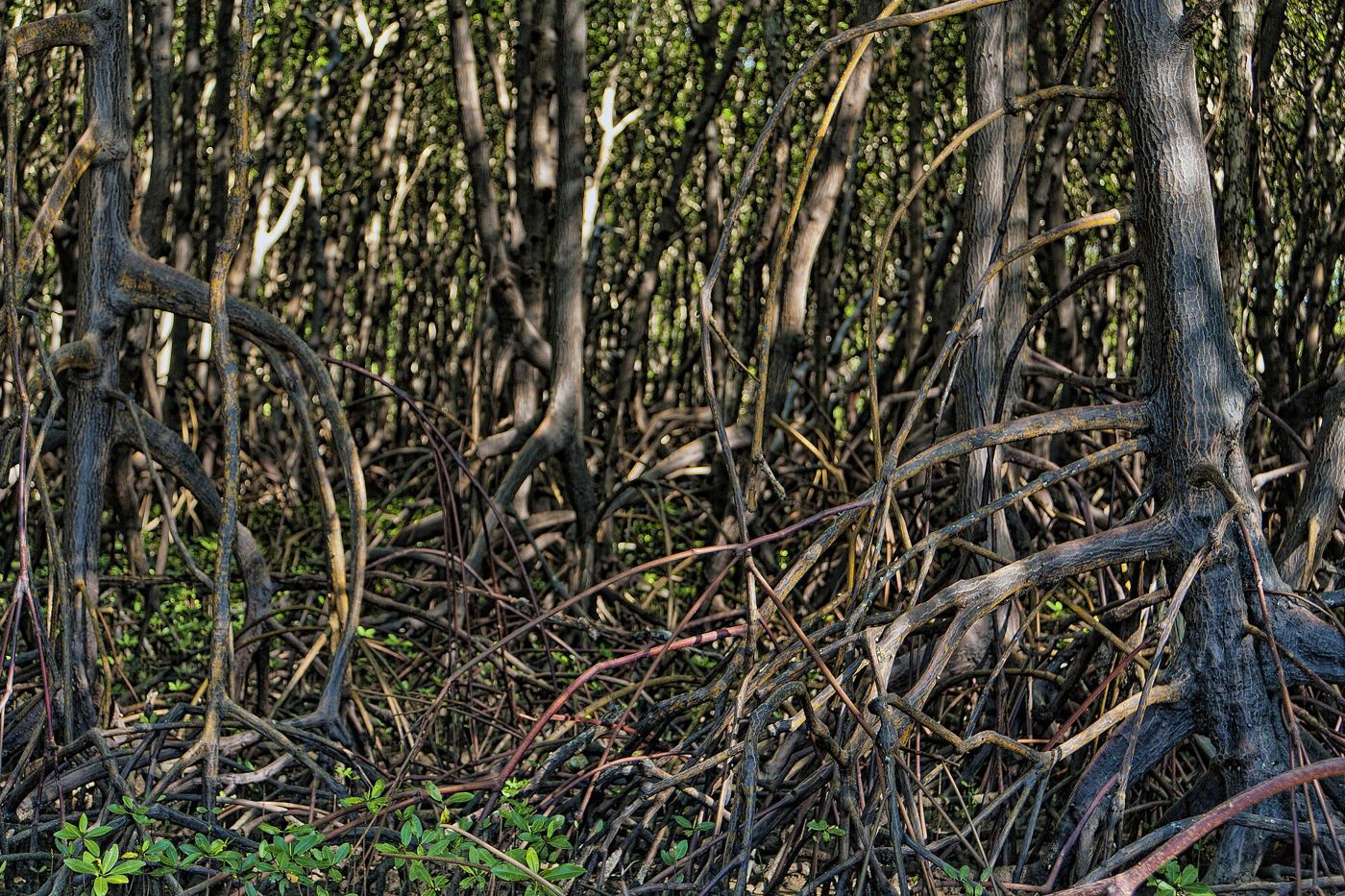
Along tropical and subtropical coasts, a dense wall of trees grows where the sea meets the land, rooted in salty mud and flooded twice a day by the tide. These are mangrove forests, and they are among the most useful ecosystems on Earth. Their tangled roots slow the water that rushes in with a storm surge, so waves lose their force before they reach homes, roads and farmland. Studies have found that a wide belt of mangroves can cut the height of storm waves dramatically, and during cyclones the forests have saved lives and property in places where the trees were left standing. The same roots trap silt and shelter young fish, crabs and shrimp, making mangroves a nursery for the fisheries that coastal families depend on.
What the Evidence Shows
Mangroves also store carbon at an extraordinary rate. Their waterlogged soils hold carbon for centuries, and a single hectare can store several times more than the same area of tropical rainforest. Yet mangroves are disappearing fast, cleared for shrimp ponds, palm oil, ports and coastal building, with large areas lost in recent decades. Restoration projects are now planting mangroves across Asia, Africa and Latin America, and they work best when local people are involved, since the trees need the right mix of fresh and salt water and the right species in the right place. Protecting the forests that remain is cheaper than rebuilding after a storm, and for millions of people who live behind them, the tangled roots are the first and best line of defence. Reporting and analysis from sources such as Associated Press track the same developments, and specialists following the mangrove forests shielding coastlines from storm surges say the direction is now consistent across independent lines of evidence.
The Wider Context
Regional and local reporting on the mangrove forests shielding coastlines from storm surges often tells a different story from national coverage, because the effects land unevenly: one town’s pilot is another’s distant proposal. Analysts who follow the subject full-time read the local data first, arguing that national averages conceal the variation that decides whether a policy or a project deserves to spread.
What Happens Next
The longer story of the mangrove forests shielding coastlines from storm surges is still being written by the people closest to it, whose experience rarely matches the earliest predictions of either supporters or critics. Reporting will continue to follow the evidence as it accumulates, including where it complicates today’s account. That is the deal serious coverage makes with its readers, and it holds for this subject as for any other. You can follow related developments in our coverage of news.
It is also worth remembering how quickly the picture in this area has changed before. Positions that looked settled a few years ago have been revised as new data arrived, and the same humility is appropriate now. The strongest coverage of this subject, and the most useful advice, tends to come from sources that update their views openly when the facts move, rather than defending an earlier position long after it has stopped fitting the evidence available.